
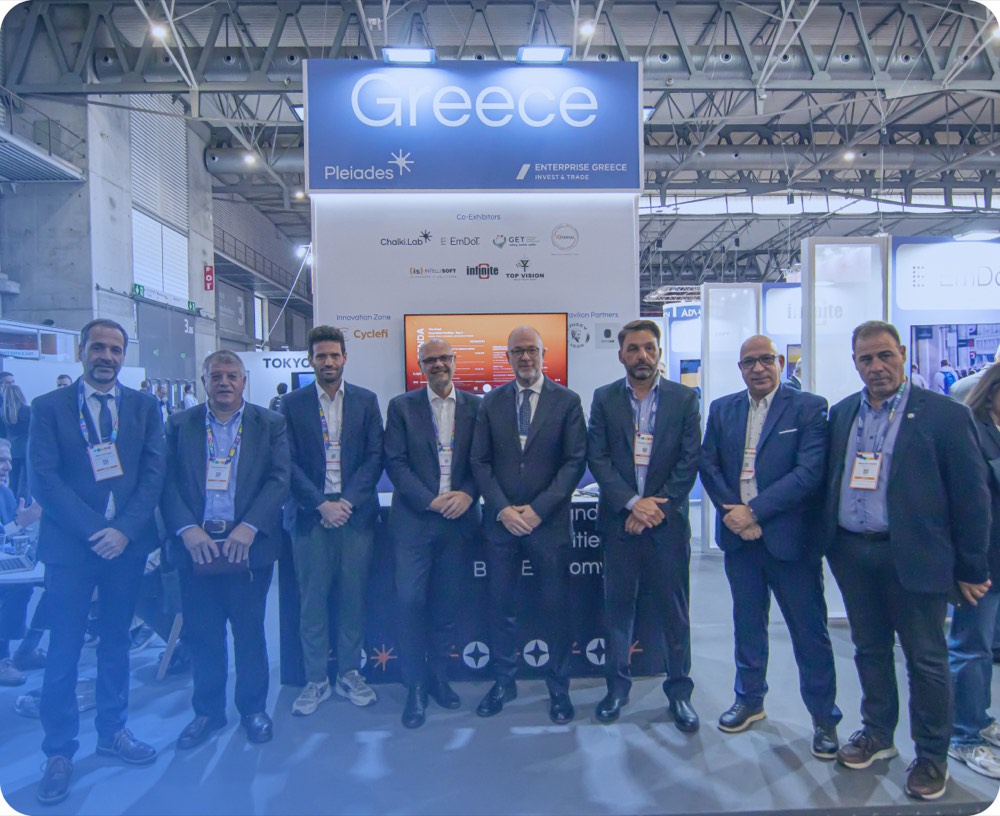
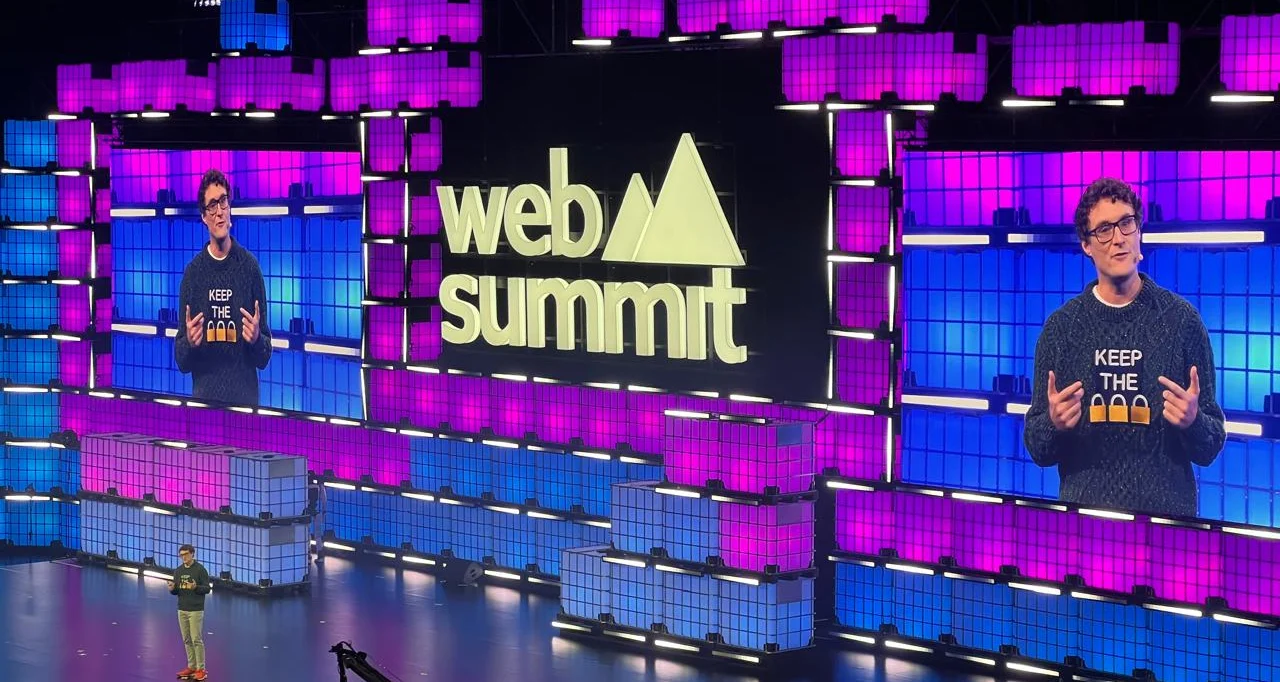
From 9 to 12 November, 18 Greek companies showed up at Web Summit Lisbon under one flag: the Greek National Pavilion, organised by Enterprise Greece together with Pleiades Innovation Ecosystem, the Athens Chamber of Commerce and Industry (ACCI) and the Athens Startup Incubator (Th.E.A.).
It was a week of around 70,000 people from more than 160 countries, robots on the main stage, and a storm that shut the venue for a full day. Here’s what we heard, who we brought, and what we’re taking home.
The week opened with a simple question: what is innovation? The Mayor of Lisbon, Carlos Moedas, and the opening speakers kept landing on the same answer. It’s the courage to be different, finding something new and useful, and working through the pain of a real problem. Lisbon presented itself as a city open to difference, and that set the tone for everything that followed.
What Lisbon was talking about
AI that does the work. The conversation has moved on from AI that writes text to agents that plan, use tools and finish multi-step tasks. Manus co-founder Tao Zhang summed up what that means for teams: “We don’t need more people; we need people who can work with AI.” For startups, the advantage is no longer a bigger team, but a team that knows how to work fiercely alongside AI.
Lead like an octopus. One of the week’s leadership talks used the octopus as a model for organisations: the brain sets the guardrails, while the arms act on their own. The lesson for leaders was to give the people closest to a decision the context they need, not more control. BYOND pushed the future-of-work debate further with a direct message: “Your best hire is AI.”
From AI agents to an AI CEO. Skyfall AI presented Steve, an “AI CEO” that runs small online businesses through a team of AI agents, with a human owner signing off on big decisions. Early results are mixed: one app’s revenue more than doubled, another slipped 3%. Autonomy is arriving fast, but people still set the rules.
The internet is being rebuilt for agents. Bots now make more web requests than people do. Cloudflare’s own data showed automated traffic passing human traffic for the first time this year, at 57.5% to 42.5%. In sessions with Cloudflare and Lovable, the big question was who wins when agents do the browsing and buying. Agents tend to favor established names, which puts startups at risk of being left out. Jonathan Arena, co-founder of AI startup New Generation, argued that your website now has to work like an agent itself, helping every visitor, human or AI, do what they came to do. Still unanswered: should sites charge agents for access, and how do you know a visitor is human?
AI got a body. For the first time, humanoid robots were on the speaker list, with Chinese firms such as UBTech, Galbot and AgiBot showing machines built for shops, pharmacies and factories. China also brought its largest delegation yet, and Web Summit founder Paddy Cosgrave opened the week with a provocation: “The superstars of the future are not coming from California; they’re coming from China.”
Trust is the real advantage. A Linux Foundation report highlighted in Lisbon surveyed 225 founders and enterprise leaders: 72% said AI is good for their business, and 57% named brand recognition and trust as their biggest competitive edge. The same thread ran through talks on European data sovereignty and on agent security, where the advice was clear: give every agent its own identity and only the access its task needs.
Marketing to machines. If agents are reading your website, your brand has to make sense to them too. Profound, which tracks how brands show up in AI answers, shared that half of the content AI answer engines cite is less than 13 weeks old. Fresh, original and in-depth content wins. TwentyFirstCenturyBrand split brand trust into two jobs: priming people the traditional way, and proving your value to machines with clear, tangible evidence. Nick Pringle, creative chief at agency R/GA, described brands moving from one fixed website to an interface shaped around each visitor, with agents doing the work and humans setting the taste.
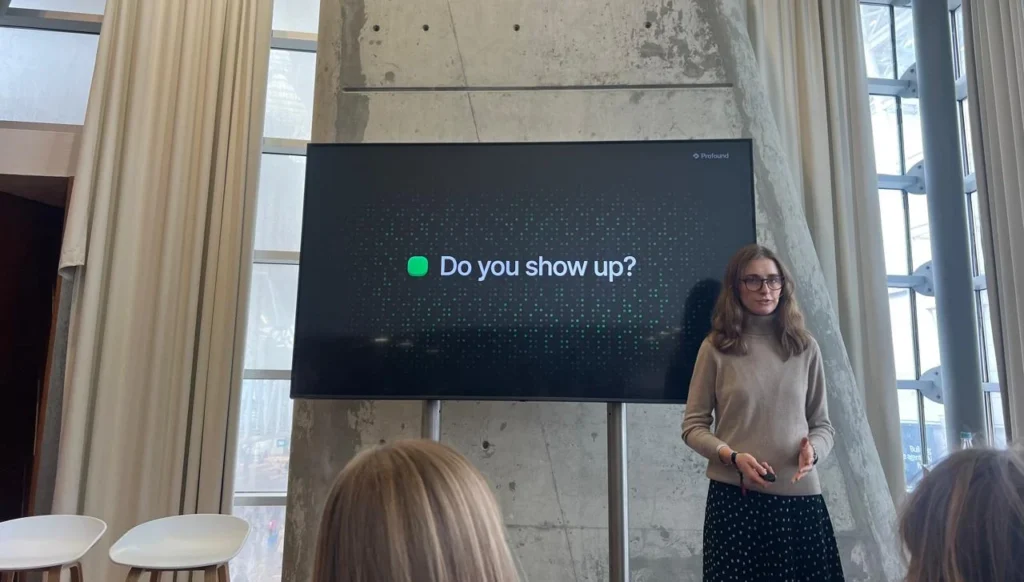
TikTok’s Isobel Sita Lumsden added the human side. The linear purchase funnel is broken, people now shop in discovery mode, and attention is expensive. Content has to entertain or be useful, not just be seen.
What Greece brought to Lisbon
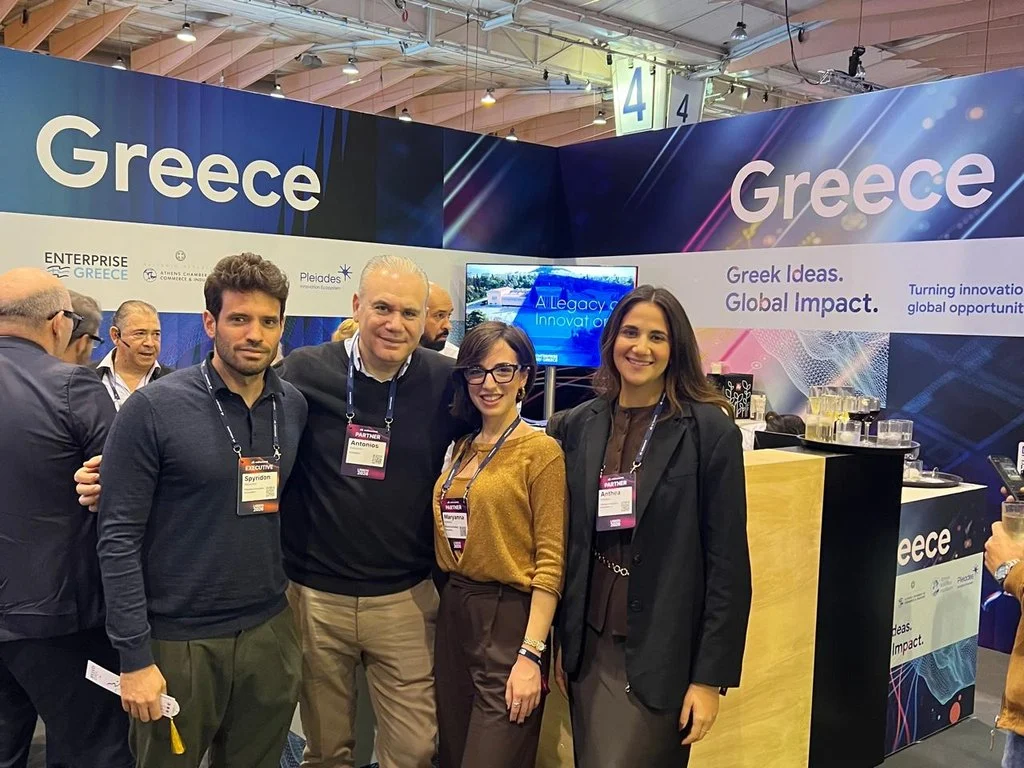
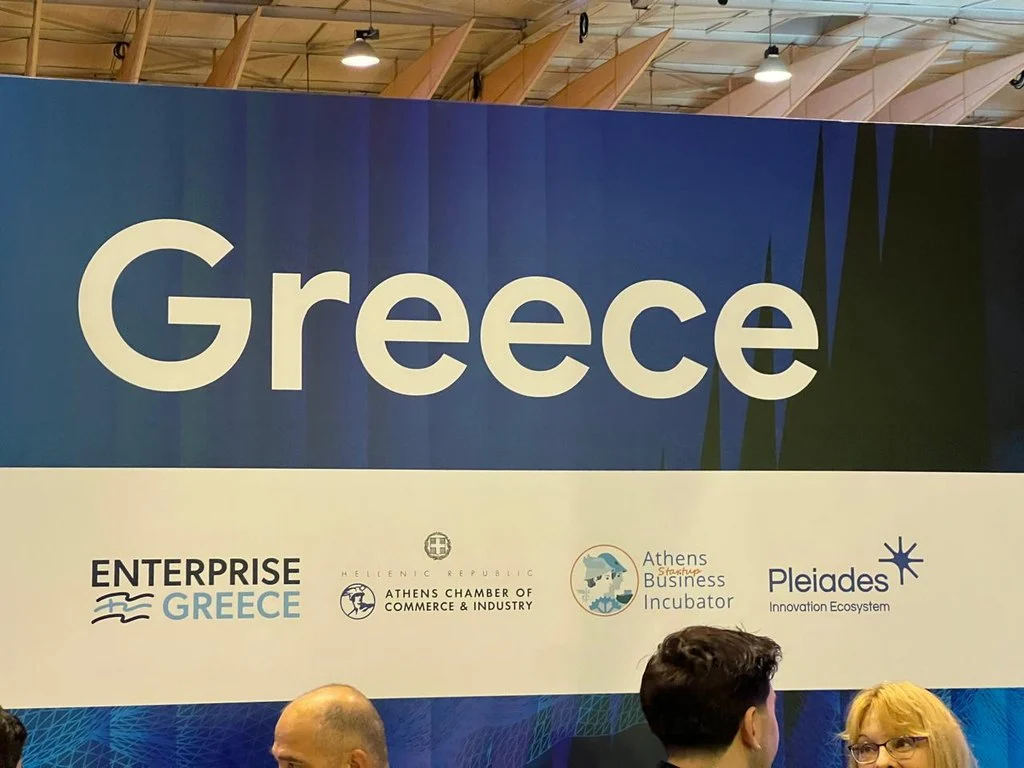
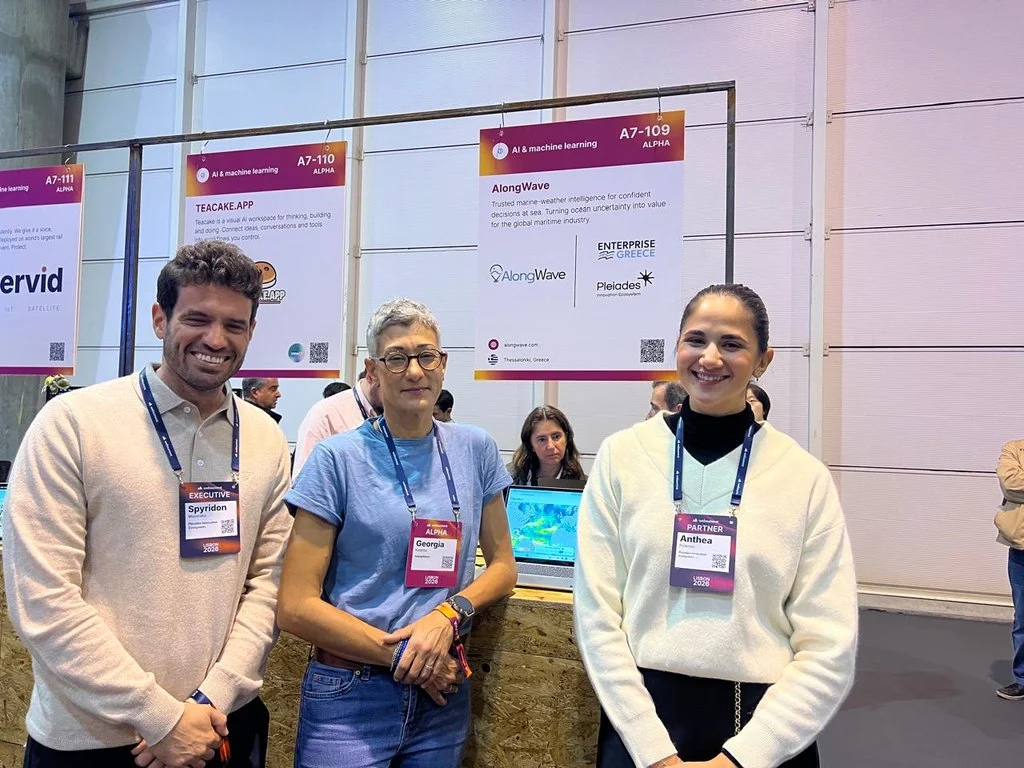
The pavilion was a joint effort. Enterprise Greece led the national delegation. ACCI and Th.E.A. brought their networks of established businesses and incubated startups. Pleiades brought new startups in through an open call and its first AI Open Challenge.
The result was 15 startups, as well as our members CiciCom and IntelliSoft and our founding partner Uni Systems, in Pavilion 4. Between them they covered shipping and logistics, pharma compliance, ESG and geospatial data, air quality, digital health, media and enterprise software.
What stood out was how closely they matched the week’s big theme. Almost none of them are building general-purpose AI. They are building AI that does one hard job well, in industries where Greece already has deep expertise.
The Open Challenge winners
AI was a requirement to enter the Pleiades AI Open Challenge, and 17 Greek startups applied. Three came with us to Lisbon:
- AlongWave (1st place) makes ocean and weather data reliable enough for shipping companies to route by. In tests against real buoy data it beat leading global forecasts by more than 20%. Prize: its own booth at the pavilion, plus flights.
- Pharos Maritime (2nd place) predicts port congestion so ships stop racing to wait at anchor. Replayed on 367 past port calls at Richards Bay, it cut average waiting time from 12.1 to 4.7 days. Prize: a Web Summit ticket and flights.
- Intelion (3rd place) automates the document review behind pharma production approvals, cutting a 14-hour review to around 20 minutes. Prize: a Web Summit ticket.
“The level of applications was exceptionally high,” said Antonis Cassano, co-founder and chairman of Pleiades. Co-founder and managing director Spiros Mazarakis put it more simply: “Greece has a place at the table.”
What we’re taking home
- Vertical AI is Greece’s edge. The world is moving towards AI that does specific, valuable work. Our depth in shipping, maritime and industry gives Greek founders a real head start there.
- Make sure agents can find you. More of your future customers will meet you through an AI agent first. A clear value proposition, real proof and fresh content are no longer nice to have.
- Showing up together works. One pavilion, four partners and 18 companies gave each team a level of visibility that would be hard to buy alone, even in a week shortened by Storm Charles.
- The real work starts after Lisbon. Founders told us that Web Summit is huge and hard to target, and that results come from structured follow-up and coming back year after year. That’s where we’ll put our energy next.
Thank you to Enterprise Greece, the Athens Chamber of Commerce and Industry, the Athens Startup Incubator, and all 18 teams who represented Greece in Lisbon.
Are you a Greek startup thinking about Web Summit 2027? Get in touch with Pleiades. We’d like to hear from you early.